Month: November 2025

From Sprints to Marathons: Schools Battle for National Canoe Titles at Hawley Lake
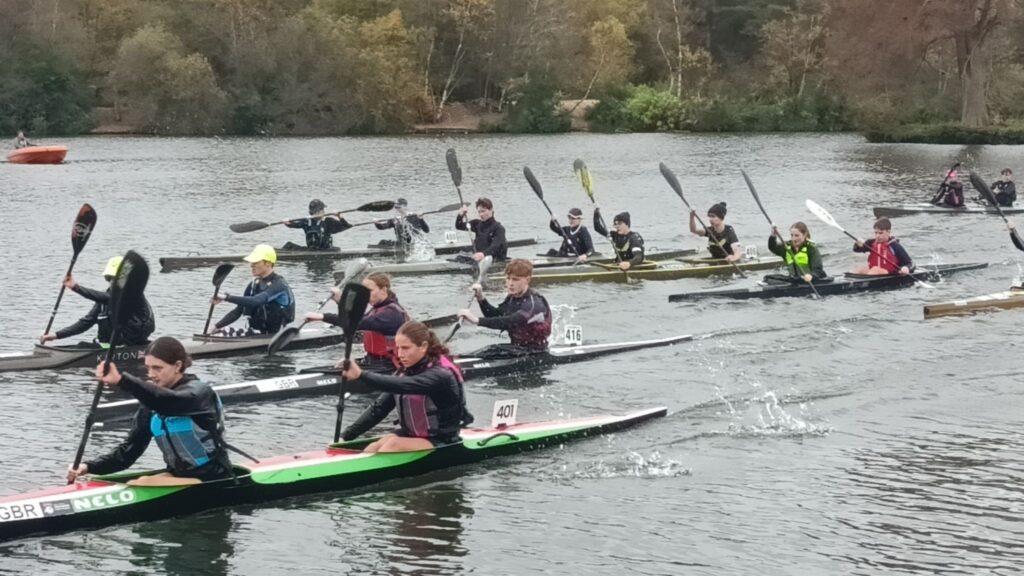
200m Experienced Knockout Heat (Credit: Adam Reid)

The National School Canoe Championships returned to Hawley Lake in Farnborough in 2025 for its fourth consecutive year as a joint-organised partnership between the Paddle UK Marathon Racing Committee and the Devizes to Westminster Canoe Race Organisation. The event was created with the main objective to encourage grassroots paddling at a school level, and the development of school teams in paddlesport.

Six schools took part this year, with paddlers representing Norwich School, Cokethorpe School, Lord Wandsworth College, Kimbolton School, Heathside School, and Bryanston School. To take part, all schools have to show an active commitment to supporting paddlesport with their students, whether that be leading the coaching through their own staffing body or using a clubs expert coaching to run a school canoe/kayak club as part of their co-curriculum/sport offering. 
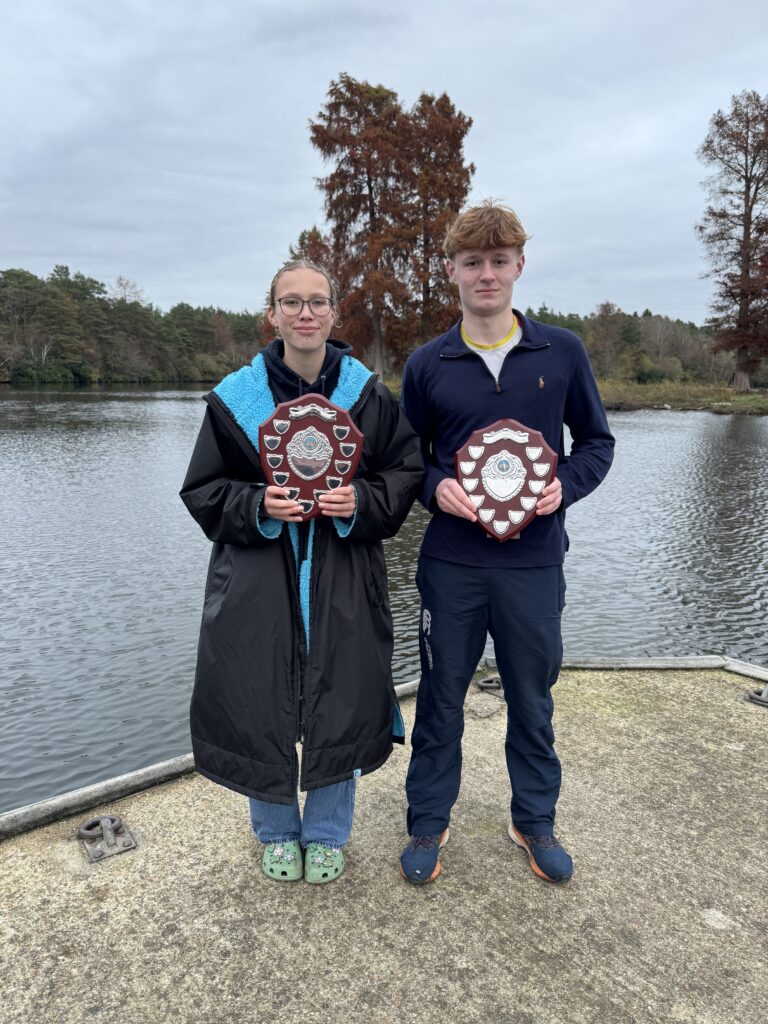
Sargeant and Walker (Norwich School) with their experienced sprint and marathon trophies (Credit: Tim Scott).

The morning programme featured sprint races over 500 metres and 200 metres in both Experienced and Novice categories. In the Experienced 500m final, Jasmine Sargeant and Dominic Walker of Norwich School claimed victory in 01:58:20. The Novice 500m final was won by Henry Wills-Cole and Charlie Williams of Lord Wandsworth College in 02:18:20, an impressive result given they only began paddling in September. The 200m knockout races added further excitement. In the Experienced final, Sargeant and Walker once again came out on top, securing the overall sprint trophy for the second year running. Imogen Field and Madison McKernan of Heathside School finished second, while Tom Barrett and Theo Brown of Kimbolton School took third. The Novice final was chaotic, with only three boats crossing the line upright, but Hugo Dawe and Hayden Nundy of Norwich School managed to win in their first ever race. Consistency across both sprint distances, however, saw Eddie Bird and Abi MacDonald of Lord Wandsworth College secure the overall Novice sprint trophy, ahead of teammates Daniel Dain and Xander Ramage in second and Dawe and Nundy in third.

After lunch, crews turned to the marathon races. The Experienced category covered six laps with five portages, while Novices raced four laps with three portages. Sargeant and Walker once again showed their strength, breaking away after the final portage to secure the marathon win. Field and McKernan of Heathside School took second place and the women’s trophy, with Sam Price and Ariana Mackie, also of Heathside, finishing third.

Speaking after the overall marathon and sprint win, Jasmine said, “It was a great day of racing, and exciting to see all the other schools taking part. It was fun to do – the multiple types of races in one day made it really special particularly as it was very well organised.”
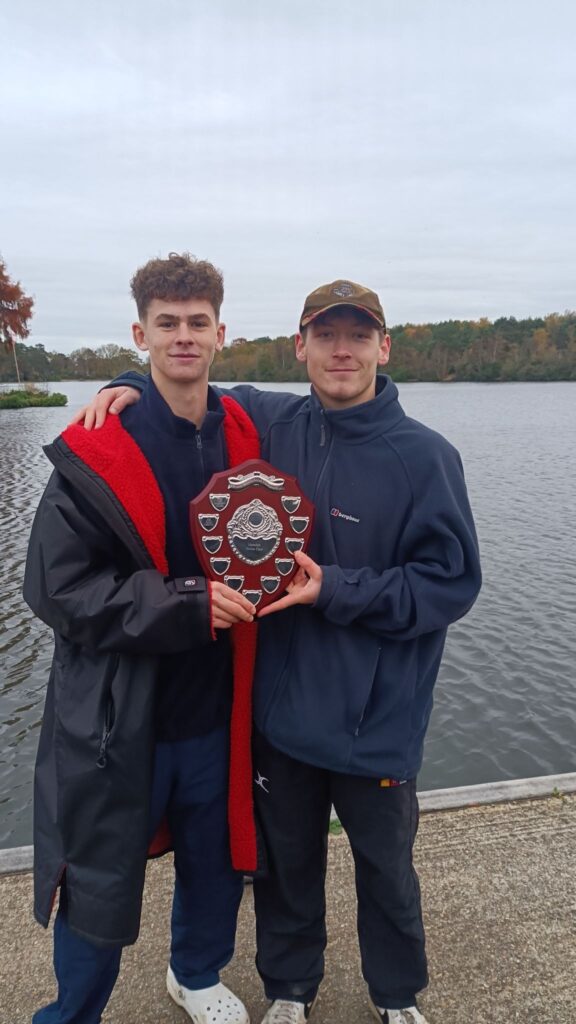
Wills-Cole and Williams (Lord Wandsworth College) with the Novice marathon trophy (Credit: Adam Reid).

In the Novice category, Wills-Cole and Williams of Lord Wandsworth College opened an early lead and held it to win by more than a minute. Luca Duncan and Freddie Kornerup, also from Lord Wandsworth, finished second, while Bird and MacDonald secured third place and the Novice mixed trophy. Daisy Mathieson and Lottie Graves of Cokethorpe School claimed the Novice women’s title.

Lord Wandsworth College’s depth was evident, with 12 of the 17 Novice crews coming from the school. Their dominance earned them the Novice team trophy, for another year, and the Novice women’s team trophy.

After reflecting on Lord Wandsworth College performance at the event, Adam Reid (Head of Canoeing at the school) said, “For LWC’s novice paddlers the Schools Nationals was a fantastic experience.  Not only was it a great opportunity to mix with teams from other schools, and to start to build relationships, it also exposed them to competitive flat-water paddling across a range of distances, and enabled them to see some top-flight paddlers in action.  To come away with the novice trophy was a tremendous boost to their confidence, and has inspired them to continue to work hard on their technique and stamina.”
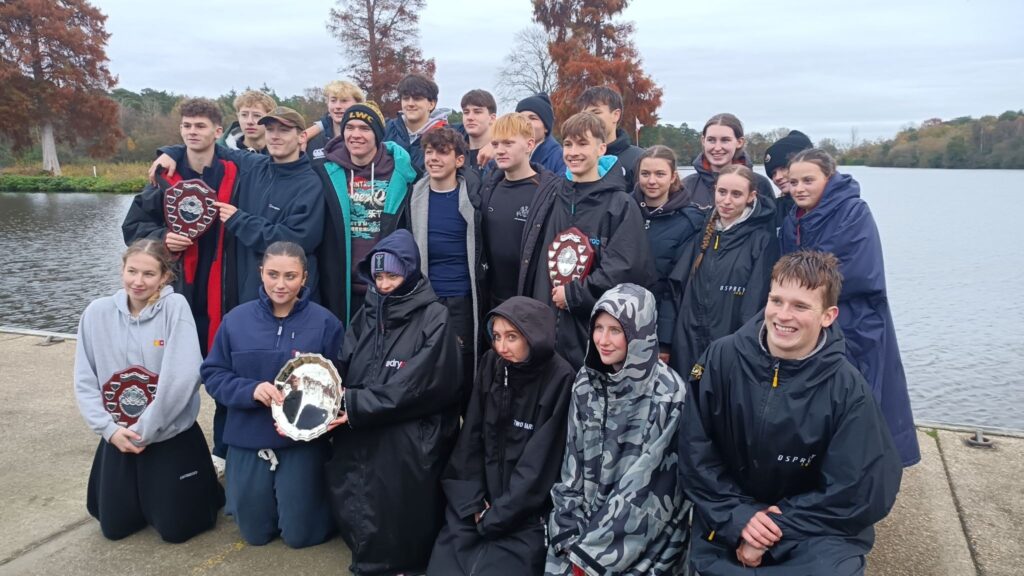
Lord Wandsworth College Team with their trophies (credit: Adam Reid).

Heathside School reclaimed the Experienced team trophy after returning to the competition following a year’s absence.

Full results can be found below and here.

The National Schools Canoe Championships will return to Hawley Lake in 2026 on Sunday 15th November. Schools wishing to enter should review the entry criteria here

If you are currently working within a school and interested in how to get more paddlesport programmes up and running, contact Holly Mobbs, the MRC Junior Development Lead, for guidance.
PaddleUK Volunteer Survey

PaddleUK are reaching out to all volunteers within the wider paddling community to understand your experience and build a stronger future for volunteering together.

You might spend your time on the water, on land, or online; at a local, national, or international level.

You might give an hour or hundreds; work on your own or lead a team.

However and wherever you help, they want your feedback via their online survey here.

Based on the feedback received, we will develop a comprehensive Volunteer Plan to provide volunteers across the paddling community with the best possible support going forwards.

Marathon Racing Committee Meeting Minutes

Have you been wondering what happens at the regular MRC meetings recently? The minutes are regularly published under the governance tab on our website here once they have been approved by committee at the next meeting.

If you have anything you wish for the committee to discuss at a meeting, please email the chair or secretary via their details on the committee page.

What is AquaPaddle?: An interview with the Founder, Brett Scillitoe

The PaddleUK Marathon Racing Committee invited Brett Scillitoe to discuss AquaPaddle to highlight an emerging, community-led initiative that combines accessible 5 km timed paddles with safety education and charitable outreach; this interview explores how AquaPaddle supports youth development, broadens club membership, benchmarks performance across craft, and funds BlueSpace therapeutic sessions that extend paddling opportunities to vulnerable and underprivileged local groups. 

Who are you, and what is AquaPaddle?

I’m Brett Scillitoe, and I have been in and around the water since I was 9, whether it was sailing, canoeing, rowing or stand-up paddleboarding. I also have a tendency to start clubs: Dittons Velo (Cycling) in 2012, Dittons Paddle Boarding in 2017, from which AquaPaddle grew.

AquaPaddle is a free, community-run, 5 km timed social paddle. It’s not a race; you can paddle it as fast or slow as you like. We also run therapeutic and educational sessions under the BlueSpace banner.

Why did you start AquaPaddle?

AquaPaddle developed out of a tragedy on The Thames when a teenager went missing while the paddleboarding club were about to go out on a Social Paddle. I wanted to help reduce preventable drownings by offering gentle on-water teaching and awareness through BlueSpace sessions. To fund that work and harness community energy, I introduced a Parkrun-style 5 km timed paddle. A number of our members had started racing, and I wanted to tap into that enthusiasm and community spirit. 

How does AquaPaddle differ from a traditional club time trial? 

I think the biggest difference is that you are lining up with unknown paddlers. Within a club, there is a “pecking order”, and very quickly, you pretty much know your place in that order. Yes, from time to time, you might have a good day and rise up the rankings or some paddlers from another club come and join your time trial. But most of the time, you will be following the same boats and paddlers as you did last time.

With AquaPaddle, that is not the case. Anyone can show up, and chances are you won’t know them. Then you add to the mix other paddle craft, and that is where the fun and magic happens. It becomes a mini paddling festival. Hardened SUP racers chasing K1s and sometimes overtaking them. People in inflatable kayaks, being inspired to buy something solid. The chat around craft and equipment before and after the event is now an established part of AquaPaddle. Then you add in the fact that the times are published online immediately after the event, which means you can see the times of other events on the day or recently, to compare paddlers you might know. It all adds to the enrichment of the whole time trial experience than a closed club time trial.

Why would marathon clubs benefit from running an AquaPaddle event at their club?

There are many reasons why a Marathon club would want to run their own event.

It is about regular training, particularly for the youth side of the clubs. It adds a different dimension to a training outing. The fact that the club paddlers could go out and do a warm-up and then take part in the AquaPaddle is all part of the fun, as happens at Nottingham Kayak Club. It gives a focus to the warm-up/training as the paddlers know they will be pushing for that personal best. AquaPaddle allows juniors to take part as long as it is part of an organised Club paddle and the coach is on the water with them, as they would normally be.

It is a great way to attract new members. We have all seen the inflatable kayaks out on the water, and to the casual paddler, speedy K1s flying by can seem quite daunting, and when Kayakers are in the “Zone”, they can seem fairly unapproachable. AquaPaddle takes all that away as ordinary people come to their clubs and chat before and after. I’ve seen this work first-hand with Hampton Canoe Club, gaining members as they let the AquaPaddlers have a go after the event.

AquaPaddle is becoming a benchmark for 5 km times. Especially from some of our faster locations, such as Lincoln, Hampton or Kilsyth, where the record has recently been broken with a time of 22 minutes 45 seconds, by a young 17-year-old paddler called Rory.

Can you tell us about any marathon club success stories already?

John Handyside from Nottingham Kayak Club says: “NKC has embraced Aquapaddle in quite a big way. Initially attracting mainly SUP’s, there is now a healthy mix of canoe, kayak, SUP’s and outriggers. The events are friendly, relaxed and fun. There has also been an increased interest in joining the club, and our rules now include membership from other craft users.”

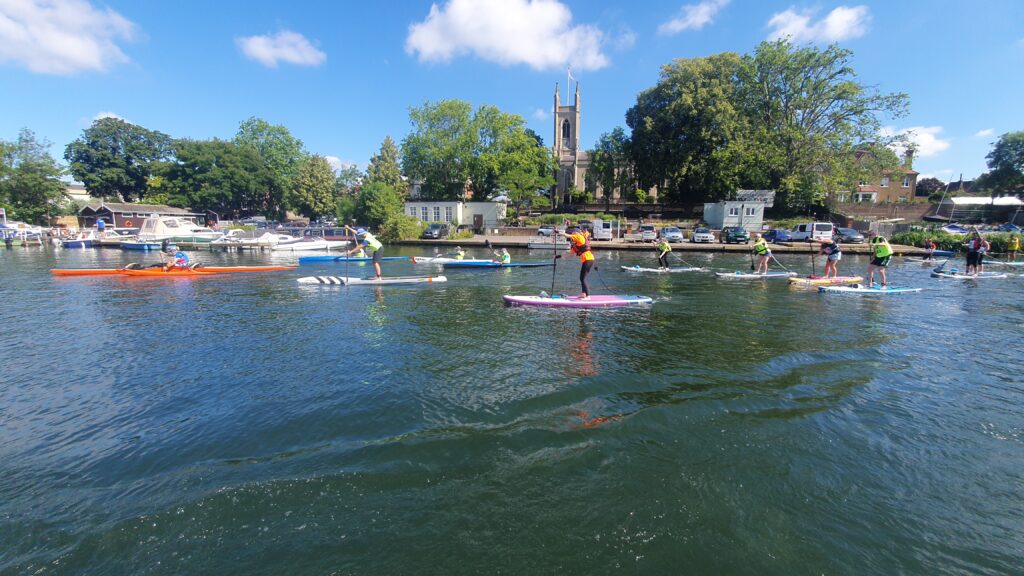
John’s final point is very good for Marathon Clubs in general. Don’t limit yourself to one type of craft. We have just witnessed the “DW” have a successful SUP trial with Paddy McCormack and AquaPaddle’s own Patron, Emily King, taking part in the stage race. The juniors with whom they were paddling and themselves got a lot of pleasure pushing each other along and hopefully improving their finish times. It is also worth noting that Nottingham Kayak Club is currently AquaPaddles second busiest location with one event attracting up to 43 paddlers! That’s a lot of teas, coffees and bacon butties sold for the benefit of the club!!

You have recently started a BlueSpace sessions initiative. What does this mean?

BlueSpace is the heart of AquaPaddle. They are the Charity sessions we run for underprivileged or those in need. We are working with Young Carers, Neurodiverse, Refugee, and Veteran communities, to name a few. They have been slow to get off the ground due to the nervousness of other charities and groups we work with to trust us with their vulnerable people out on the water. You can imagine the risk assessments some of these organisations need to do when booking sessions with us.

The way it works is that AquaPaddle funds local Delivery Partners to run the sessions. We are not asking for anyone to volunteer for these sessions as there is cost and equipment that needs to be maintained.

Our Delivery Partners are generally involved with AquaPaddle Locations in some form, but not exclusively. For instance, if a Marathon Racing Club were to run AquaPaddle, then we would be happy to talk to them about becoming a Delivery Partner and starting to help their local community. They could, obviously, do this themselves; however, as we grow, we will be able to help more people through the publicity of the events we run nationally. 

All our locations have their own donation pots that local paddlers can donate to their local BlueSpace sessions. Once there is enough in the pot, we then work with the local charities and groups to help people in need. 

Thank you to Brett for spending some time chatting with us about AquaPaddle and how it could strengthen marathon club offerings and more. If you are intrigued about how AquaPaddle and also the BlueSpace sessions could integrate into your club offering already, feel free to get in contact with AquaPaddle directly to start the conversation or explore their website for more information. The MRC strongly believes the more people getting on the water safely, the better. 

Becoming an ITO: An Interview with Mags Dilai (NKC)

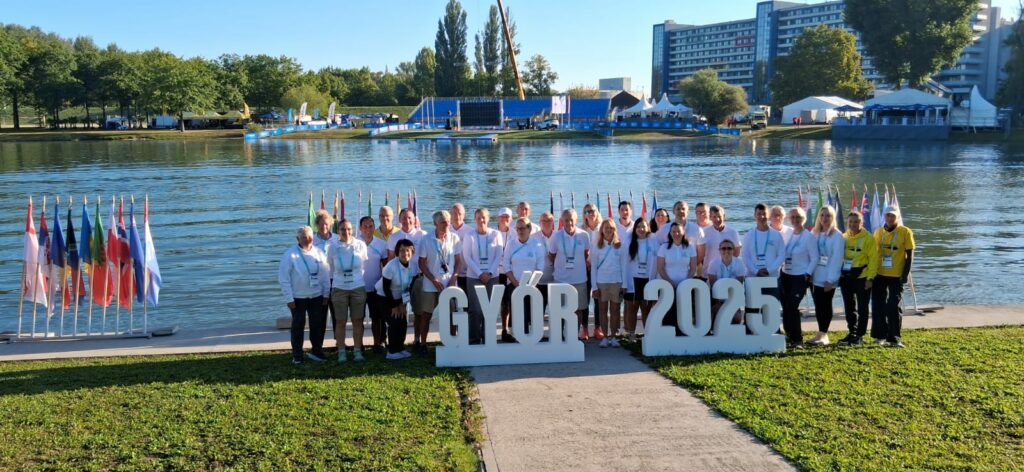
For many years, the Marathon Racing Committee has supported the International Canoe Federation by helping members qualify as International Technical Officials (ITO) and volunteer at World and European Championships. In the last two years two new members of PaddleUK and the marathon community have qualified as ITO’s.

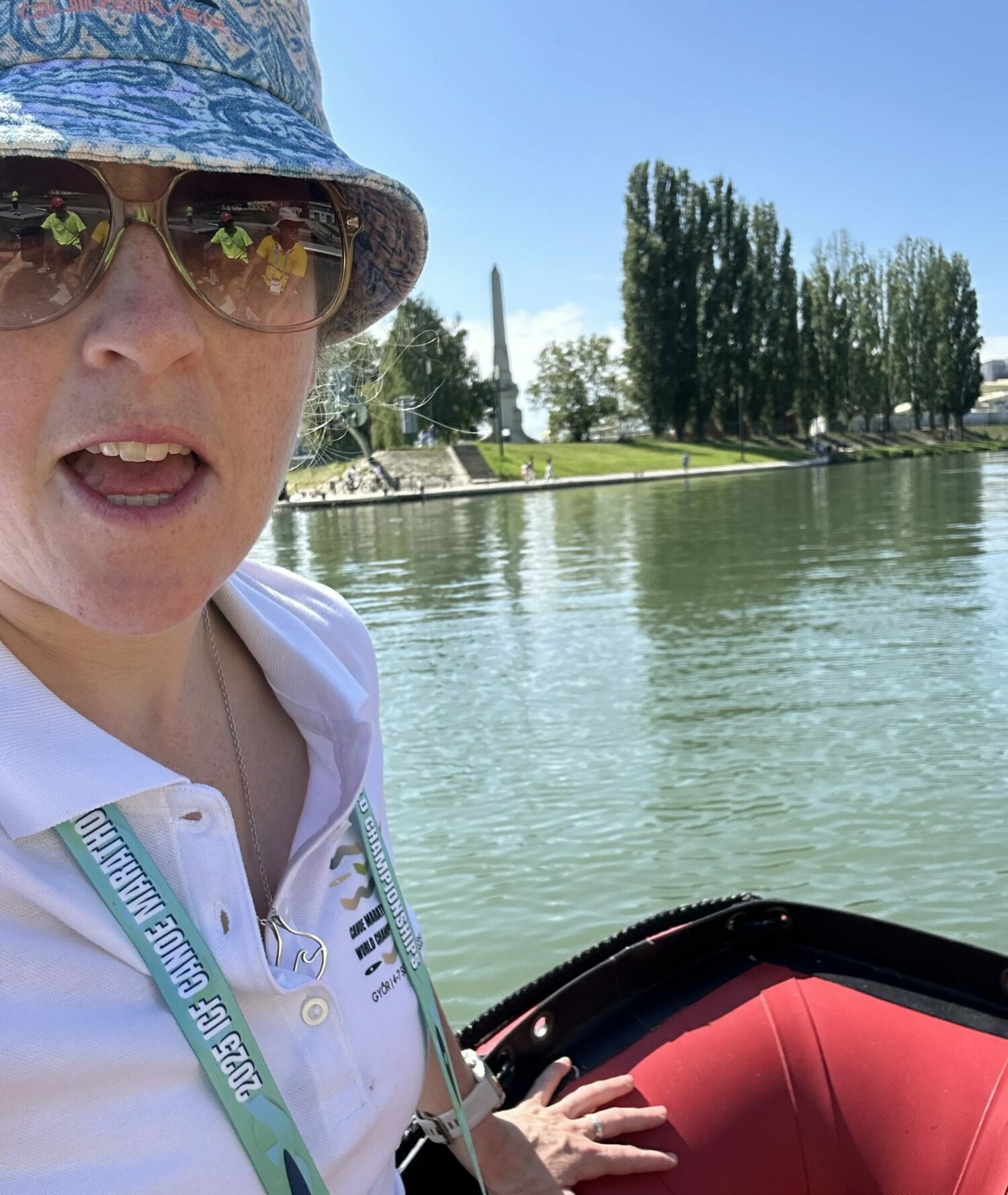
One of the newly qualified ITO’s, Mags Dilai (Nottingham Kayak Club), has agreed to share her experiences of qualifying and working as an ITO at marathon international races this year.

What is an ITO? 

An ITO is an international technical official. In Canoe Marathon this means being positioned around the course to watch for any infractions that need reporting back to the Chief Official, and to keep track of where all paddlers are in relation to laps and position in the race. ITO’s also register paddlers on and off the water and may serve as starters, finishers or in boat weighing.

What was the process of becoming an ITO like?

Firstly, you must first be nominated to the ICF by your national governing body (PaddleUK and the MRC). I was approached by the Marathon Racing Committee and, although I was unsure at first because I didn’t know exactly what was involved, it quickly appealed to me. I’m a bit of a paddling geek, I attend international events to watch, and I enjoy being helpful, so the role felt like a perfect fit.

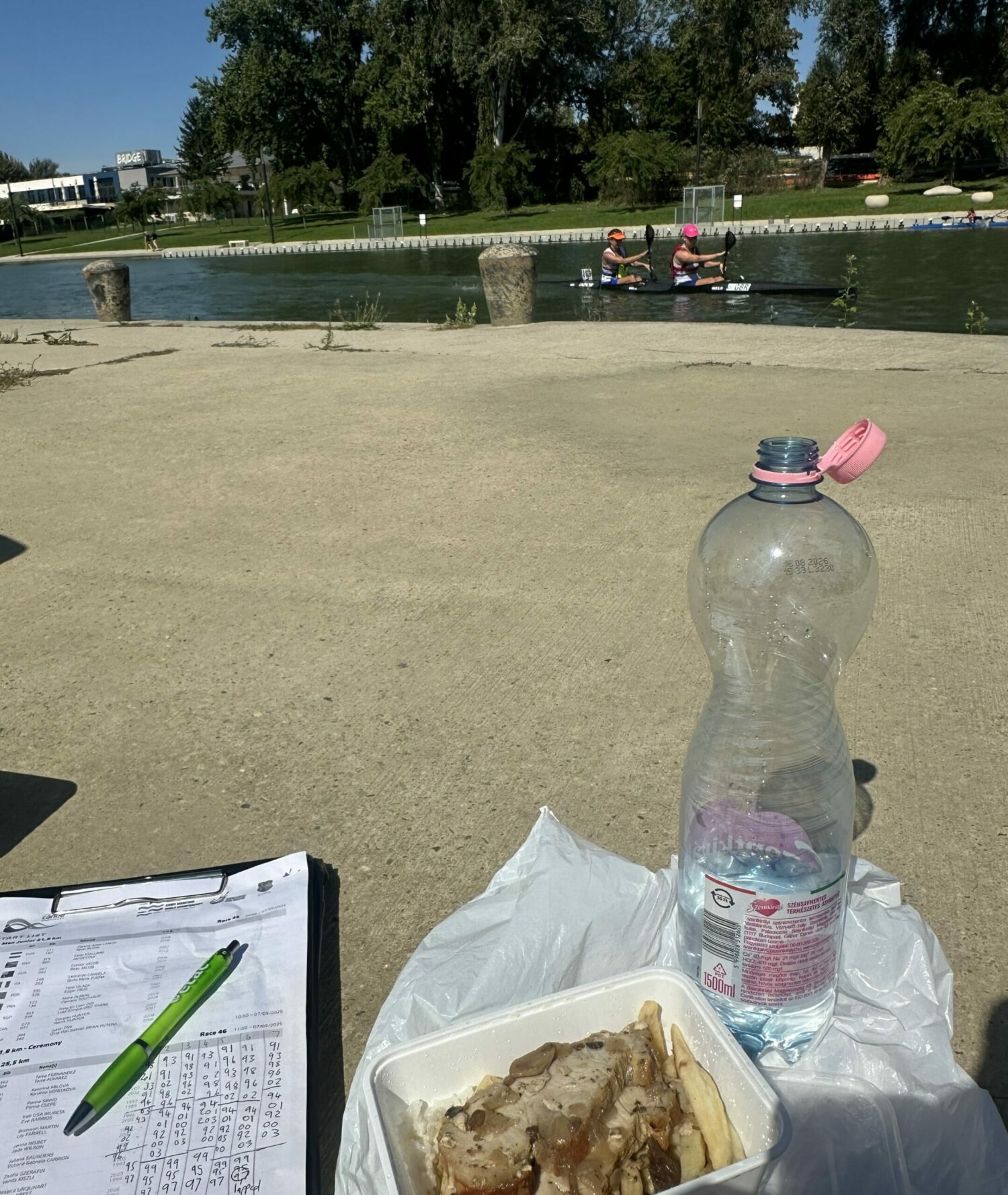
To become an ITO, you have to pass 2 written exams/multiple choice exams: one on ICF statutes, and one on discipline specific rules. The exams are timed and open book but there is very little time to flick through anything so you do need to know your stuff on the rules and learn a bit about the ICF and how it operates. The more fun side of ITO assessment is the practical part. You get to work alongside established ITOs at a world championships. Each person you work with reports back to inform the decision on whether you pass to be an ITO or not. I was very fortunate to get the opportunity to work as an ITO in the first year I qualified but it’s not always the case. You normally have to give your availability via your governing body and then the ICF select a team for each event.

Your first internationals as a qualified ITO was this year. What did you get up to? 

This year I covered a turn for two days and then portage judging on another day. At the portage, I was in charge of waving the yellow flag to signal a penalty and directing paddlers to the penalty box. It’s not the most popular job because you have tired, confused paddlers and at that moment they definitely don’t like you! 

The turn I was on was hectic because it was under a kilometre from the start, on a concrete bank where often large groups were turning in flowing water!

What has been some of your favourite roles to take on as an ITO? 

I really like being a course umpire. That usually means being on the water in a boat, keeping an eye on a turn or a part of the course that could get interesting. It’s really exciting to see the races unfold and it’s non stop counting boats and keeping track of numbers, so you don’t get bored!!

What would be your advice to anyone considering becoming an ITO?

I would say prepare for long days out in all elements, far from toilets and food! Take everything with you. It’s definitely not a holiday; it’s hard work but it is also a great experience. Being an ITO gives you a unique view of competition and the volunteer effort that makes the live race we see on the live streams possible.

I’ve met people from all over the world who share the same passion for paddling (maybe not as geeky in their marathon paddling knowledge as me though)! I’ve got invitations to go and visit fellow ITOs from across the globe and paddle their local waters, although I feel bad that the exchange for them is Nottingham!

Thank you Mags for sharing your experiences. If you are interested in becoming an ITO or even intrigued enough to have a conversation about it, please contact the Marathon Racing Committee via the Secretary.